FPAM LIVE
2,764+ Federal Assets Catalogued Nationwide Coverage: All 36 States + FCT Abuja 31 Federal Ministries & Agencies — Fully Inventoried Federal Republic of Nigeria — FMHUD Asset Management Division Ensuring Accountability, Transparency & Stewardship of Public Property FRSC: 229 Facilities — Largest MDA Portfolio in the Register 2,764+ Federal Assets Catalogued Nationwide Coverage: All 36 States + FCT Abuja 31 Federal Ministries & Agencies — Fully Inventoried Federal Republic of Nigeria — FMHUD Asset Management Division Ensuring Accountability, Transparency & Stewardship of Public Property FRSC: 229 Facilities — Largest MDA Portfolio in the Register
Live Registry — 2,764+ Assets
Federal Infrastructure · Abuja, FCT
Federal Republic of Nigeria

Safeguarding Nigeria's
Federal Public Assets

The Department of Federal Public Assets Management is responsible for overseeing, maintaining, and protecting all federal government buildings and facilities across Nigeria's 36 states and the FCT — a living record of national infrastructure.

0+
Total Assets Catalogued
0
Ministries & Agencies Covered
0+
States & FCT
0
Largest MDA Portfolio
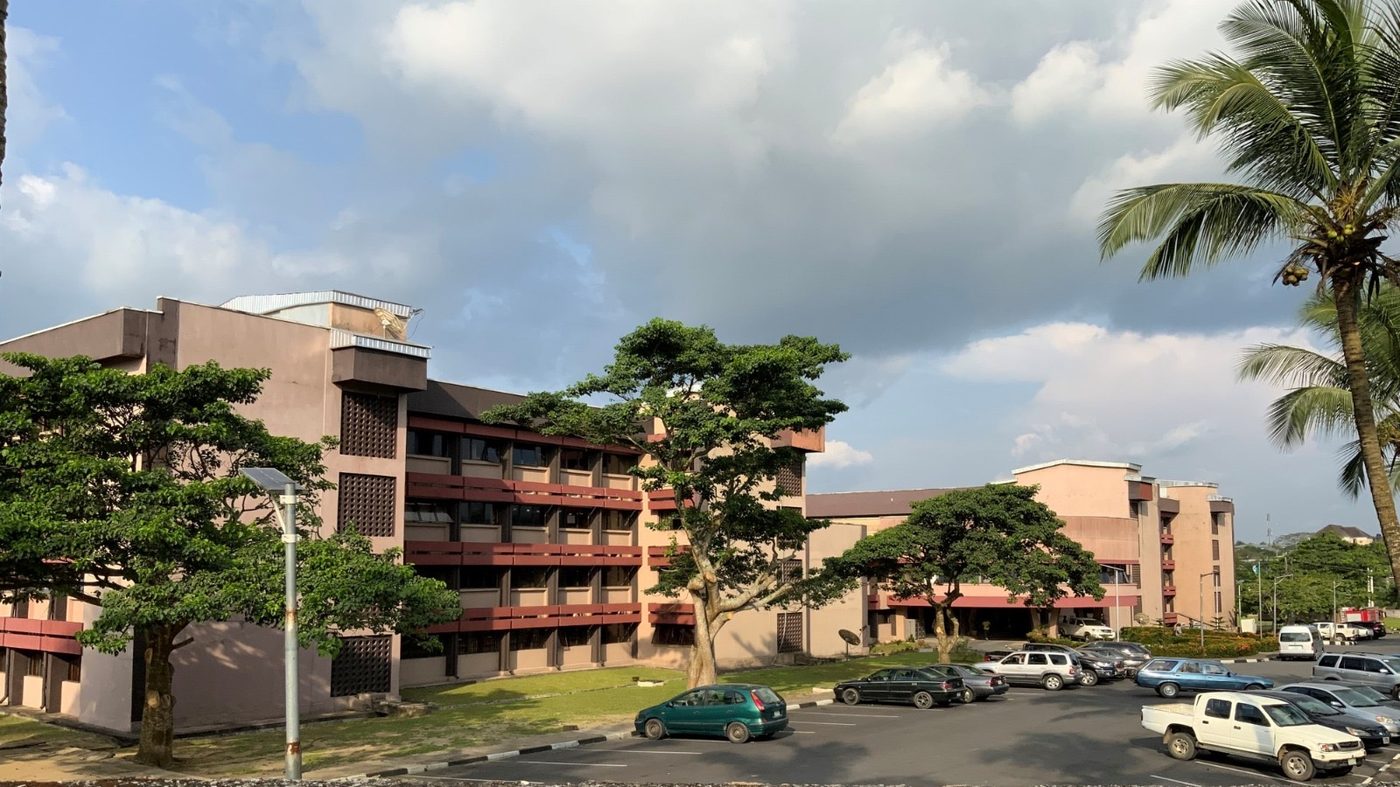
Central Bank of Nigeria Headquarters, Abuja

Ensuring every federal asset is functional, safe, and accessible for Nigerians.

Our Mission

A Department Built on Accountability & Stewardship

The Department of Federal Public Assets Management (FPAM) operates under the Federal Ministry of Housing and Urban Development. It serves as the custodial authority for all federal government properties — ensuring they are well-maintained, properly documented, and efficiently managed on behalf of the Nigerian people.

Asset Registry
Maintains a comprehensive national database of all federal public buildings and facilities.
Facility Maintenance
Oversees repairs, renovations, and servicing of government infrastructure nationwide.
Standards & Policy
Develops and enforces maintenance standards, efficiency benchmarks, and safety guidelines.
Outsourced Services
Supervises third-party facility management service providers contracted by the government.

Our Mandate & Responsibilities

The Department exercises oversight across six key operational pillars, ensuring the federal government's physical infrastructure is managed with efficiency, transparency, and national purpose.

01
Management of Federal Buildings
Responsible for the administration and management of all federal government buildings, offices, secretariats, and other public facilities across Nigeria.
02
Maintenance & Repairs Oversight
Coordinates and oversees the maintenance, repair, cleaning, and facility services for all properties under federal government jurisdiction.
03
National Asset Database
Maintains a real-time, comprehensive inventory of all public assets nationwide — covering location, purpose, valuation, and condition assessment.
04
Standards Development
Creates, updates, and enforces maintenance standards, efficiency benchmarks, and best practices for asset upkeep and facility management.
05
Third-Party Supervision
Supervises outsourced facility management companies and service providers to ensure contractual obligations and quality standards are met.
06
Safety & Accessibility
Ensures all federal buildings are structurally safe, operationally functional, and accessible to civil servants and members of the public.

Public Buildings Register

A searchable, filterable record of federal government buildings and facilities across all states — drawn from the official inventory database.

S/N Ministry / Agency (MDA) Purpose State Local Govt Address / Location Landmark Year Details

Assets by Ministry & Agency

A breakdown of the number of facilities under each federal ministry and agency, reflecting the scope and reach of the federal government's physical infrastructure.

National Asset Condition Report

Every federal building in the FPAM register is graded annually against a five-tier condition framework. Field engineers carry out structural, mechanical, and safety evaluations — generating a live picture of the physical state of Nigeria's federal estate and informing maintenance budget allocation.

0
Assets Graded
Grade A — Excellent38%
Grade B — Good31%
Grade C — Fair18%
Grade D — Poor9%
Grade E — Critical4%

How We Grade Federal Buildings

Each of Nigeria's 2,764+ registered federal assets receives an annual condition grade determined by FPAM-certified engineers. Grades drive maintenance budget prioritisation — Grade D and E assets trigger emergency procurement, while Grade A and B assets enter routine servicing cycles.

A
Excellent — Fully Operational
Structurally sound, all systems functional, no maintenance deficit. Enters standard quarterly servicing.
1,050
B
Good — Minor Defects Only
Minor wear, cosmetic issues, or non-critical system faults. Scheduled for routine rectification.
857
C
Fair — Moderate Deterioration
Noticeable structural or system issues. Maintenance intervention required within the current fiscal year.
497
D
Poor — Significant Deterioration
Structural compromise or critical system failure. Fast-tracked for emergency contract procurement.
249
E
Critical — Immediate Action Required
Unsafe for occupation or public access. Closed pending emergency intervention or demolition review.
111

The FPAM Inspection & Maintenance Cycle

FPAM operates a structured four-quarter inspection cycle across all 37 states and FCT. Each phase involves different teams, tools, and outcomes — together ensuring no federal asset goes uninspected for more than twelve months.

Q1 — Jan/Mar
Annual Survey & Registration Verification
Field teams verify all assets listed in the national database against physical ground-truth. New assets are added; decommissioned structures are flagged for removal. GPS coordinates and photographic evidence are updated for every property.
GPS Verification Photo Survey Database Update
Q2 — Apr/Jun
Structural & Safety Assessment
Certified structural engineers carry out full building assessments — inspecting foundations, load-bearing elements, roofing, plumbing, electrical systems, fire safety compliance, and disability access. Condition grades are issued and uploaded to the central registry.
Structural Check Fire Safety Accessibility
Q3 — Jul/Sep
Maintenance Execution & Contractor Supervision
Based on Q2 grades, maintenance contracts are awarded and executed. FPAM supervisory engineers conduct weekly site visits to verify workmanship, materials quality, and timeline adherence. Contractors are rated on completion and can be blacklisted for non-performance.
Contract Award Site Supervision Vendor Rating
Q4 — Oct/Dec
Performance Review & Annual Report Compilation
The year is closed with a national performance audit — measuring how many assets improved in grade, how many deteriorated, total maintenance spend versus budget, and contractor compliance rates. Findings inform the following year's budget submission to the Federal Ministry of Finance.
Annual Report Budget Review Grade Analysis
Zonal Inspection Teams
FPAM deploys dedicated inspection teams across Nigeria's six geopolitical zones, each led by a Principal Engineer. Teams are equipped with digital condition-reporting tablets that sync directly to the national asset database in real time — eliminating paper records and reducing data lag.
Third-Party Compliance Audit
Independent audit firms are engaged annually to cross-verify FPAM's own condition assessments — ensuring objectivity and preventing grade inflation. Audit results are submitted to the Office of the Auditor-General of the Federation and are a matter of public record.
Digital Reporting Portal
MDAs can submit maintenance requests, track the status of active repairs, and download condition reports for their facilities directly through the FPAM digital portal. All communications are logged with timestamps, creating an auditable trail for every maintenance interaction.

Federal Asset Valuation & National Balance Sheet

FPAM is the primary source of physical verification data for Nigeria's national balance sheet — ensuring that federal assets are accurately valued, properly recorded, and reported in accordance with the International Public Sector Accounting Standards (IPSAS) framework adopted by the Office of the Accountant-General of the Federation.

01
Periodic Revaluation
All federal buildings are subject to periodic revaluation in line with FIRS and OAGF guidelines. FPAM-certified estate surveyors assess replacement cost, depreciation, and market comparables to arrive at a fair value — ensuring the national balance sheet reflects current economic reality rather than historical acquisition cost.
02
IPSAS Compliance Reporting
Nigeria's transition to accrual-basis IPSAS reporting requires full asset registers with verified values, useful life estimates, and depreciation schedules. FPAM provides the physical data layer — GPS-verified locations, construction years, floor areas, and condition grades — that underpins this statutory requirement.
03
Encroachment Detection
A significant proportion of federal properties nationwide are subject to encroachment — illegal occupation, boundary disputes, or unlawful subletting. FPAM's field survey programme identifies encroached assets, initiates legal recovery processes through the Federal Ministry of Justice, and updates records to reflect recovery status.
04
Asset Disposal & Rationalisation
Not every federal asset should remain in government hands. FPAM leads periodic rationalisation reviews — identifying underutilised, redundant, or strategically misplaced properties and recommending them for disposal, transfer to state governments, or conversion to higher-value uses. All disposals are subject to FEC approval.
05
Heritage Asset Classification
Certain federal buildings carry historical, architectural, or cultural significance that precludes standard disposal or demolition. FPAM classifies and maintains a register of heritage assets — coordinating with the National Commission for Museums and Monuments to ensure protected structures receive appropriate conservation treatment.
06
Capital Budget Planning Support
By maintaining verified condition data and valuations for every federal asset, FPAM provides the Federal Ministry of Finance with a data-driven basis for capital budget allocation — allowing the government to prioritise spending on the assets with the greatest maintenance need and public value.
The Federal Estate as a National Financial Asset

Nigeria's 2,764+ registered federal buildings represent one of the country's most significant off-balance-sheet resources. Accurate valuation, proper documentation, and active management of this estate — the core mission of FPAM — is not merely an administrative exercise. It is a direct contribution to the integrity of Nigeria's public finances, the attractiveness of the country to investors, and the accountability owed to every Nigerian taxpayer.

2,764+
Assets on National Balance Sheet
31
MDAs with Verified Asset Registers
IPSAS
Accounting Framework
100%
Assets GPS Verified